|
||||
|
Set of build items so you can build your own version of Ostia, the ancient Roman city at the mouth of the Tiber that served as the port for Rome itself. Click on the picture to download the iff, wll, or flr. game picture of 'Ostia' here or should I break this down differently? long panel of Ostia picture, the full width of the page? then each type gets its own section? How many across? four? Six? Why was it five here? Okay, nice wide view of Ostia would be nice, maybe a street scene or something. Also, want to thank ostia antica site! They are so cool! so many pictures! |
||||
|
So then doors on this row: |
single wooden |
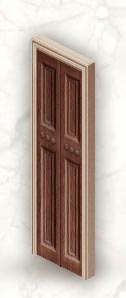
Narrow wooden double doors set in a marble frame. |
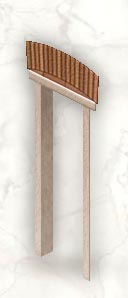
Doorway with marble frame; exterior has an opus latericium brick arch over. |
|
|
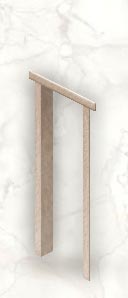
Doorway like the last only without the brick arch, for interior use. |
double arch opening |
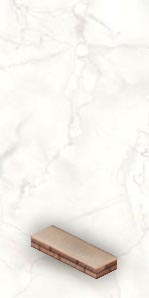
Doorstep of opus latericium with stone tread, cloned from a step by Bunny Wuffles. |
|
|
|
windows row |
single window |
double window (two side by each) |
double window that is really a single with a semi-circular arch in brick over |
|
|
columns arches other build stuff row |
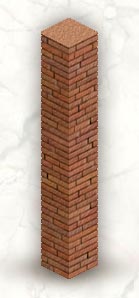
Sturdy brick column in basic square shape, after a kind found all over the place in Ostia. |
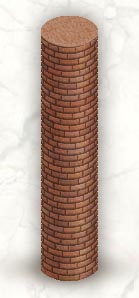
Plain round brick column. |
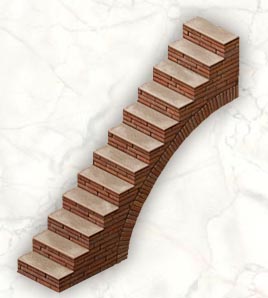
Staircase with brick risers and stone treads. Arch underneath for a lighter look; you may wish to butt it up against a wall so it doesn't look like it's going to fall over. |
|
|
banister |
Pluto's arch recolor |
other fancier staircase; no railings or support, cloned from the one I used for the Minoan staircase, only tidied up a bit. Brick risers, marble treads. |
Same as last staircase but decorative, so can put them with columns at top for good temple look. Also make them line up perfectly at edges. |
|
|
aediculae/plaques in this row |
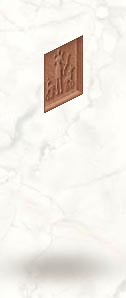
Terracotta inset plaque of Diana, the Roman Goddess of the moon and the hunt. Backless, as it was originally set straight into the wall. After one found in the courtyard of the house named after it the Casa di Diana. |
|
|
|
|
low plaque of Gorgon? |
brickwork aedicula for outdoor shrine? |
|
|
|
|
walls exterior |
Opus Latericium The ubiquitous Roman brick work, which is exactly what opus latericium means in Latin, 'brick work.' |
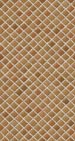
Opus Reticulatum Roman building technique using small diamond-shaped blocks of the local stone, driven into a concrete core. The name means 'net work' after the diamond pattern. |
Opus Quadratum Made up of cubes of stone, usually tufa, the name simply means 'square work.' |
|
|
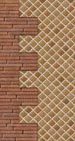
Opus Mixtum The name means 'mixed work' obviously enough; here opus latericium and opus reticulatum are combined. |
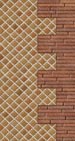
Opus Mixtum An opposite version to combine with the last. |
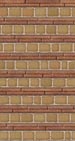
Opus Vittatum Meaning 'ribbon work', this building technique alternates rows of opus latericium and opus quadratum. |
|
|
|
walls interior some simple ones for the non-patrician sorts. Plebeian, and/or middle class, merchant class I guess. |
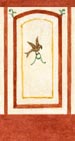
Left-hand panel of three with a flying swallow carrying a ribbon or garland. After a fresco from the Building of the Charioteers in Ostia. |
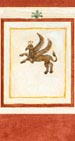
Central panel with griffin. |
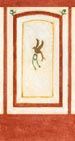
Right-hand panel with swallow carrying a garland or ribbon. |
|
|
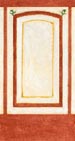
Arched panel left blank inside as a simple architectural-ish element. |
Simple version with red painted at top and bottom. |
Very simple version, just the white plaster, which doesn't show up too well against this marble background, does it? |
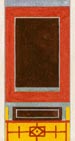
Panel design in black and red, after a fresco from the House of the Priestesses in Ostia. It's hard to tell against this background, but each of the panels in this set has a white stripe at the edge. |
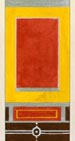
In red and yellow, from the House of the Priestesses; the original dates to 130-140CE. |
|
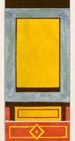
In off-blue and yellow. |
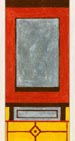
In red and off-blue. |
|
|
|
|
black and white mosaic floors now I know I have about a million of these. I know they look kind of dingy here, but they look so good in-game you won't believe it. They really sit nice and flat. |
Mosaic floor tile after a pattern found in the Theater Baths at Sabratha, Libya, dating to about the second century CE. |
Another from the Theater Baths at Sabratha. |
A design after one found in Ostia. |
|
|
Another from Ostia; this one was found outside a thermopolium, or a fast-food eatery, more or less. |
From a Roman villa in Austria; this one is a little later than the others, dating from the fourth century CE. |
Delicate filigree-type design from Hadrian's Villa in Tibur, from the second century CE. |
Also from Hadrian's Villa; odd design looks rather like four fezzes to me. Quadruple the coolness! |
Plain old chequerboard to match the others. |
|
Design of little crosses from about the second century CE. |
After a pinwheel design found in Ostia. |
Another pinwheel in the opposite direction; goes nicely alternated with the first one. |
Mosaic design after one found in Ostia, with pink marble circles. |
Black and white version of the same. |
|
Diamond in a square design that is good for a corner block; oddly enough, if you pave an expanse with this it instantly goes from Roman to Renaissance. |
Another good one for a corner block; after one in Sabratha in Libya. |
And another corner, after a mosaic in Ostia. |
Plain black mosaic tile to match the others; goes nicely under the rugs, as they tend to let a little grass show through at the edges. |
And one in white, to complete the set. |
|
mosaic rugs to go with the floors |
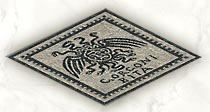
Gorgon Mosaic 'Rug' After a floor design from the House of the Gorgons in Ostia, this 2x2 four-rotation rug works well as a central medallion over one of the patterns above, or in front of a double door. Gorgons were believed to have protective properties. |
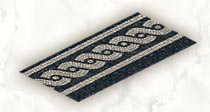
Looped Mosaic Border This mosaic 2x1 four-rotation 'rug' works well as a border with any of the designs above. |
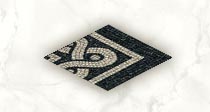
Looped Mosaic Corner A 1x1 four-rotation corner piece to go with the border to the left. |
|
|
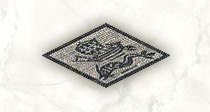
Shipping Trade Mosaic After a trade mosaic found in Ostia, this 1x1 four-rotation mosaic 'rug' is based on a ship and dolphin mosaic which was set into the sidewalk in front of a merchant's office, to identify and advertise the merchant as an overseas trader. |
Grain Merchant Trade Mosaic Like the last one, this 1x1 four-rotation 'rug' is after a trade mosaic found in Ostia. The bucket-looking thing is a grain measure; with the two ears of wheat it shows that the merchant specialized in trading grain. |
Roman Trade Mosaic This trade mosaic, also from Ostia, shows an amphora with the initials M.C. between two palms; this meant the merchant dealt in trade with Mauretania Caesariensis, a colony in northern Africa. |
|
|