
The religion of the ancient Egyptians was a remarkably ancient
and stable one, in accordance with the stability of their society. Their country
along the Nile River was protected by natural features from outside invasions
and regulated by the predictable cyclical nature of the annual flood, when the
Nile, swollen with rains from central Africa, overflowed its banks, bringing
rich silt to renew the soil, as well as life-giving water. This flood was so
reliable, seasonally, that the Egyptians timed their calendar by its rising
waters, which marked the beginning of their New Year.
Many of the Goddesses of ancient Egypt seem to have been local
Goddesses from early times that later spread through the land when the two lands
of EgyptUpper Egypt in the south and Lower Egypt in the north or Deltawere
brought together. Quite a few of the Goddesses, such as Hathor,
Neith, and Bat, have cults that date back to Predynastic times, which is something
like 3000 BCE. And as many of them were still honored up into Ptolemaic times,
around the beginning of the current era, we're talking 3000 years of continuous
worship.
A lot of the Egyptian Goddesses are rather better known by their
Greek names, such as Au Set (Greek Isis), Het-heru (Hathor), or Nebethut (Nephthys,
whose name I assume owes its Gaelic-style cluster of consonents to the Greek
letters phi and theta being transliterated as two letters each);
their entries are under the original Egyptian names, with the Greek names listed
and linking to those articles (except in the case of the articles of the Goddess
Oracle Deck, which use the Greek names, mostly). Goddesses with an *
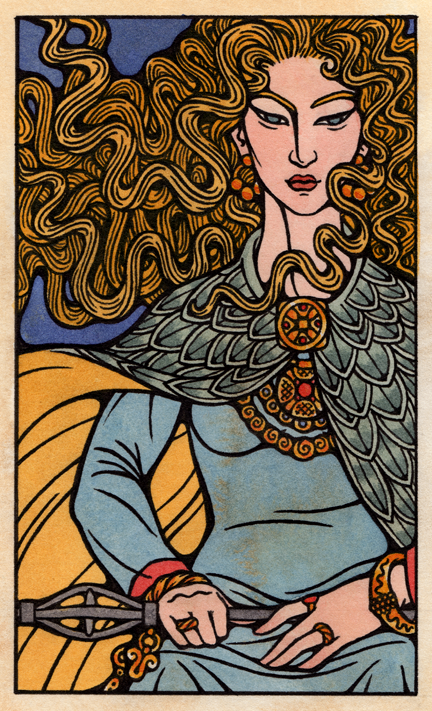
have illustrations, by me; for now they are all from the Goddess Oracle Deck.
I've recently redesigned these pages so they aren't so eye-bleedingly
bright. Much as I wish it would, that lapis lazuli/carnelian/turquoise/gold
color scheme that works so well in Ancient Egyptian jewelry does not translate
well to a web page, so in the interests of ocular safety I've toned the background
down to that old standby of Egyptian-themed webpages, papyrus. (And it is just
me, or is there no decent computer-palette turquoise?)
Aakhabit, Aa-sheft, Aasith, Aat-aatet, Aat-khu, Abet-neteru-s, Ahabit, Ahat,
Ahemait, Ahi, Ahti, Akarkhentkats, Akert-khentet-Auset-s, Akhet, Akusaa, Amaunet,
Amemet, Amenet, Ament, Amenti, Ament-Semu-Set, Amit, Ammut, Amn, Amunet, Amunta,
Anat, Anatis, Anit, Anka, Ankhet, Ankthith, Anpet, Anta, Antat, Anuke, Anuket,
Anukis, An-unsser, Apet, Apitus, Apt, Apt-hent, Apt-renpet,
Ara-seshap, Aritatheth, Asbet?, Aset, Asit, Ast, Astarte, Atem, Atet, Athtor,
Auramoouth, Au Set, Aukert, Auset, Autyeb
Baalat, Bahet, Bastet, Bat, Behbet, Beset, Buto
Chensit, Clother
Djet
Ehe, Epet, Ermutu, Ernutet
Hap-tcheserts, Hak, Hast, Hathor*,
Hat-mehi, Hatmehyt, Hauhet, Heb-i, Hedetet, Heh, Hehet, Hekenth, Heket, Hemsut,
Henemet-em-anh-annuit, Henet, Hentet-arqiu, Hent-nut-s, Heptet, Heqet, Heret-Kau,
Herit, Her-sha-s, Her-tep-aha-her-neb-s, Her-tept, Hert-erman, Hert-ketit-s,
Heru-pa-kaut, Heru-seka, Hesa, Hesat, Hetemitet, Hetep-sekhus, Het-hert, Het-kau-neb-er-tcher,
Hetpet, Hoh, Horit, Huntheth
Iat, Igaret, Imentet, Imsety, Ini-herit, Input, Iou-s-aas, Ipet, Isis*,
Iunit, Iusaaset, Iusaset
Kadesh, Ka-harus-ap-saru-ma-hakar-uma, Kahi, Kait, Kakit, Kartek, Kauket,
Kebechet, Kebehwet, Kebehut, Kefa, Kek-t, Kekuit, Kenat, Kenemet, Kenmut, Kerhet,
Khaft, Kha-ra-ta-nekh-ha, Khebent, Kheftes-hau-hesqet-neha-her, KhefthernebesKhemit,
Khenememtit, Khent, Kheperu, Khera, Khesef-khemt, Khnemet-urt, Khoemnis, Khut
Ma, Ma'at, Mafdet, Mafiet, Mai-hesa, Mak-nebt-s, Manefertra, Mehen, Mehenit,
Mehet, Mehet-Weret, Mehi, Mehit, Mehiti, Meh-khebitet-seh-neter, Mehueret,
Mekhit, Menat, Menhenet, Menhet, Menhit, Menhyt, Menkheret, Menqet, Meret,
Meretseger, Merhyt, Meri, Merit, Mert, Merti, Mesenet, Meshkent, Mesta, Mestjet,
Meskhenet, Methyer, Mht wr.t, Mihit, Mut, Mut-neb-set, Muyt
Nahab, Naham-ua, Nahmauit, Nakith, Naprit, Nau, Naunet, Nazit, Neb-ankhet,
Neb-anu, Nebet-hetepet, Nebet-hotep, Neb-senti, Nebt, Nebt-er-tcher, Nebti,
Nebt-met, Nebt-neti, Nebt-setau, Nebt-shat, Nebt-shefshefet, Nebt-thehent,
Nebt-unnut, Nebtusha, Nebtuu, Nechmetawaj, Nefertum, Nehebka, Nehemauit, Nehemcou,
Nehimeou, Nehmet-awai, Nehemtawy, Neith, Nekhbet*,
Nekhen, Nekiu, Nen, Nephthys, Nepit, Neprit, Nesbet, Neseret, Neshtu, Nesi-Khonsu,
Netert-en-Khentet-ra, Netet, Netheth, Netpe, Ninet, Nit, Noub, Nubait, Nukara,
Nunet, Nushim, Nut*
Pacht, Pakhet, Par-neferu-en-nub-set, Pasht, , Per Uadjit, Perit, Phut, Proet
Qadesh, Qebhsnuf, Qetesh
Raet, Rait, Rannu, Ranpu, Rat, Ratta, Rat-tanit, Rat-taui, Renen, Renenet,
Renenti, Renenutet, Rennutet, Renpa, Renpet, Repa, Reret, Reschep, Ritho, Ronpet
Sa, Sachmet, Safekh-aabut, Sag, Sah, Sakhmis, Saosis, Sapt, Sarset, Satel,
Satet, Sati, Sati-abut, Sati-arut, Satis, Schent, Seba, Seben, Sebit, Seb-tet,
Sefkhabu, Seher-tut, Sekhemet-ren-s-em-abet-s, Sekhet, Sekhet-aanru, Sekhet-bast-ra,
Sekhet-hetepet, Sekhet-metu, Sekhmet*,
Sekseket, Selk, Selket, Semt, Senb-kheperu, Seneb, Sentait, Seret, Serket,
Serqet, Ser-t, Sesenet-khu, Seshat, Seshetat, Seshetet, Seth?, the Seven Cows/Kine
Deities, Shait, Shemet-khu, Shenat-pet-utheset-neter, Shentayet, Shenty, Shepet,
Sheput, Shesat-makey-neb-s, Shesmetet, Sheshat, Shes-kentet, Sheta, Shilluk,
Smamet, Sobkhit, Sochet, Sofh, Sokaret, Sothis, Souban, Suvan
Ta-Bitjet, Tafne, Tafner, Tafnuit, Tait, Tanenit, Tanen-tu, Taninit, Taourt,
Ta-repy, Tasenetnofret, Taueret, Taur, Ta-urt, Tawaret, Tayet, Tayt, Tcheser-shetat,
Tchesert, Tefnut, Tekaharesapusaremkakaremet, Tekhi, Temtith, Temu, Tenemet,
Tenith, Tent-baiu, Tentenit-uhert-khakabu, Tentyris, Tesert, Themath, Thenenet,
Thmei, Thoeris, Tie, Tjenenyet, Tmei, Tree Goddesses, Tuatt-makel-neb-s, Twelve
Hours of the Night Goddesses, Typho
Uadjet, Uat, Uatchet, Uatch-ura, Uati, Uazit, Ubastet, Uertheku, Umm s-Subyan,
Unen-em-hetep, Unnit, Unnut, Ur-mertu-s-teshert-sheni, Urt-hekau, Urt-hikeu,
Urt-sekhemu, Usert, Ushmet-hatu-kheftiu-ra, Usit, Uto
Wadjet, Waset, Watch-merti, Wenet, Wepset, Weret-Hekau, Wosyet
Yept
Zenenet
